
Bui Huu Hung’s Artworks
Bui Huu Hung’s primary medium is native Vietnamese lacquer (sơn ta), with many of his works incorporating mixed-media practices. Over the course of nearly five decades, he has built a singular visual vocabulary through sustained experimentation and research into the medium.
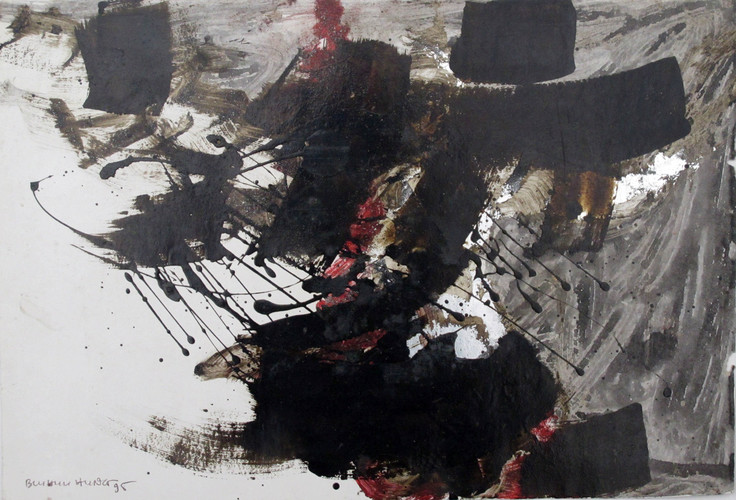
Early abstract: Bui Huu Hung, Untitled, 1995. Lacquer on paper, 30 x 30 cm. Private collection. © Bui Huu Hung Foundation.
Untitled, 1995
Untitled belongs to an early abstract series and reflects Bui Huu Hung’s experimental use of lacquer on paper, a rare and technically demanding support for the medium. Abstraction was present from the outset of his practice and would later reappear at larger scales and in different material forms. This work was presented in Black & White at Salon Natasha, Hanoi, in 1996, an exhibition organised by Eric Leroux. The exhibition responded to minimalist practices in art and stood in deliberate contrast to the brightly coloured palettes prevalent in commercial galleries at the time.
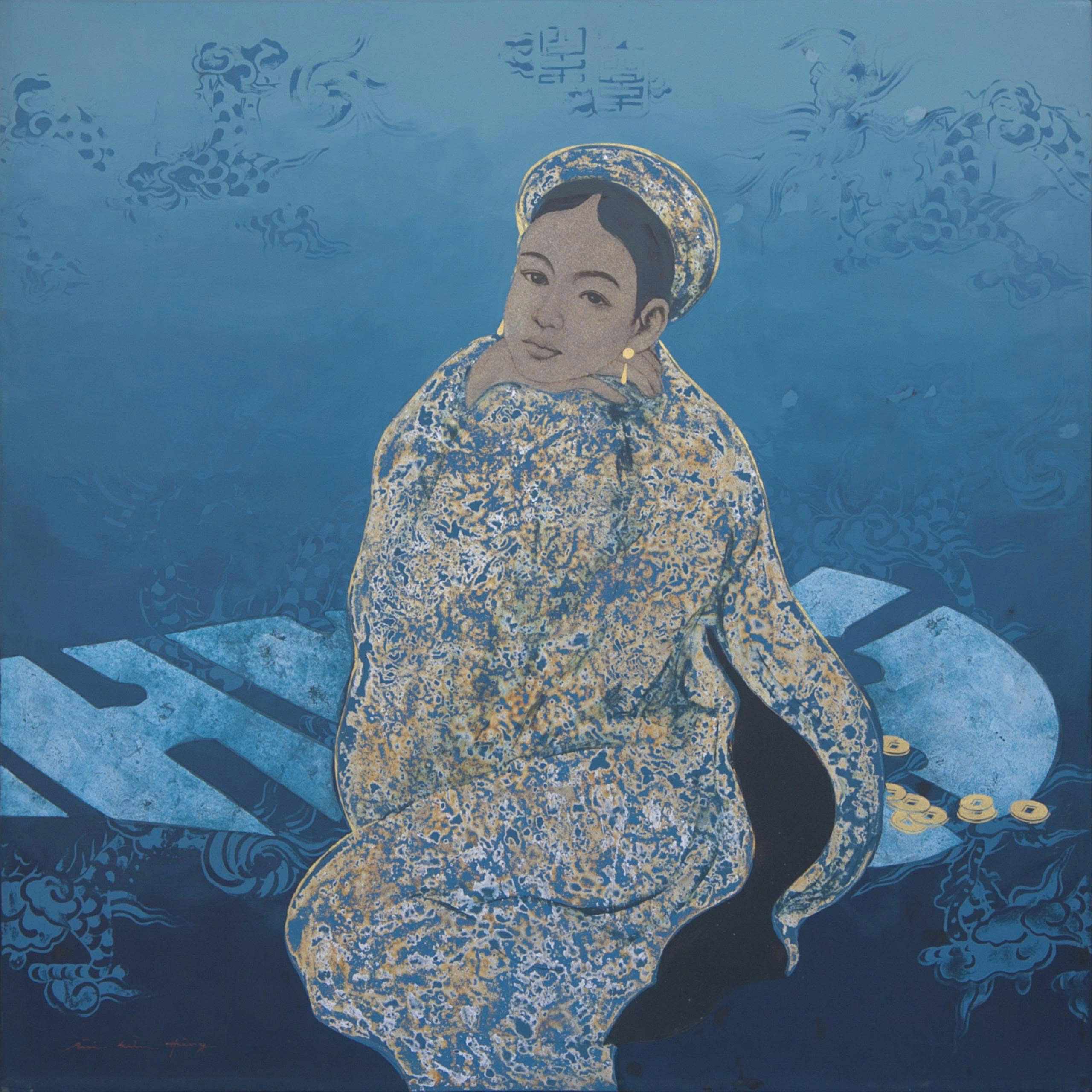
Portrait: Bui Huu Hung, Solitude, 1998. Lacquer on wood, 100 x 100 cm. Public collection. Paris, France. © Bui Huu Hung Foundation.
Solitude, 1998
The late 1990s marked the emergence of portraiture as a defining element of Bui Huu Hung’s work. His figures, often drawn from imagined or historical pasts, are depicted in traditional attire and imbued with symbolic roles tied to specific cultural and temporal contexts, sometimes inscribed directly onto the surface.
In Solitude, a young Vietnamese woman sits motionless, her stillness recalling the permanence of sculpture, inspired by The Thinker by Rodin. The figure evokes the condition of Vietnamese intellectuals in the 1990s, a period shaped by economic embargo and social isolation, when aspirations for recognition often went unheard. Across his career, Bui Huu Hung expanded this portrait language into works of varying scales, from figures and still life to scenes of family life, royal courts, and rural settings.
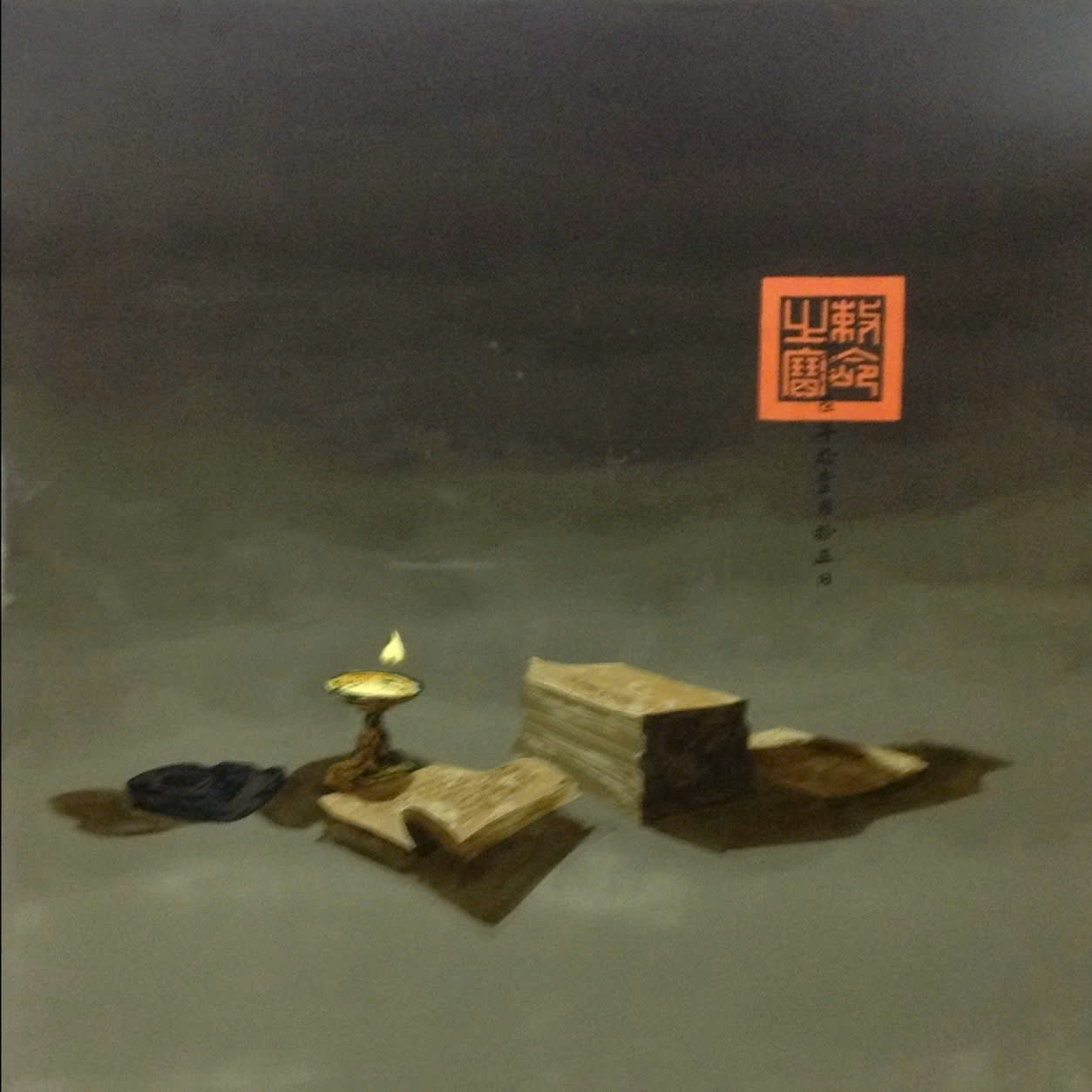
Still life: Bui Huu Hung, Still Life, 2008. Lacquer on wood, 122 x 122 cm. Private collection. © Bui Huu Hung Foundation.
Still Life, 2008
Many of Bui Huu Hung’s works draw on memories of distant or imagined pasts, conveyed either through portraiture, landscape or still life. Objects function as vessels of human presence, bearing traces of those who once owned or used them. In Still Life, the arrangement of objects suggests a personal history, allowing the narrative of an absent figure to emerge indirectly through material form.
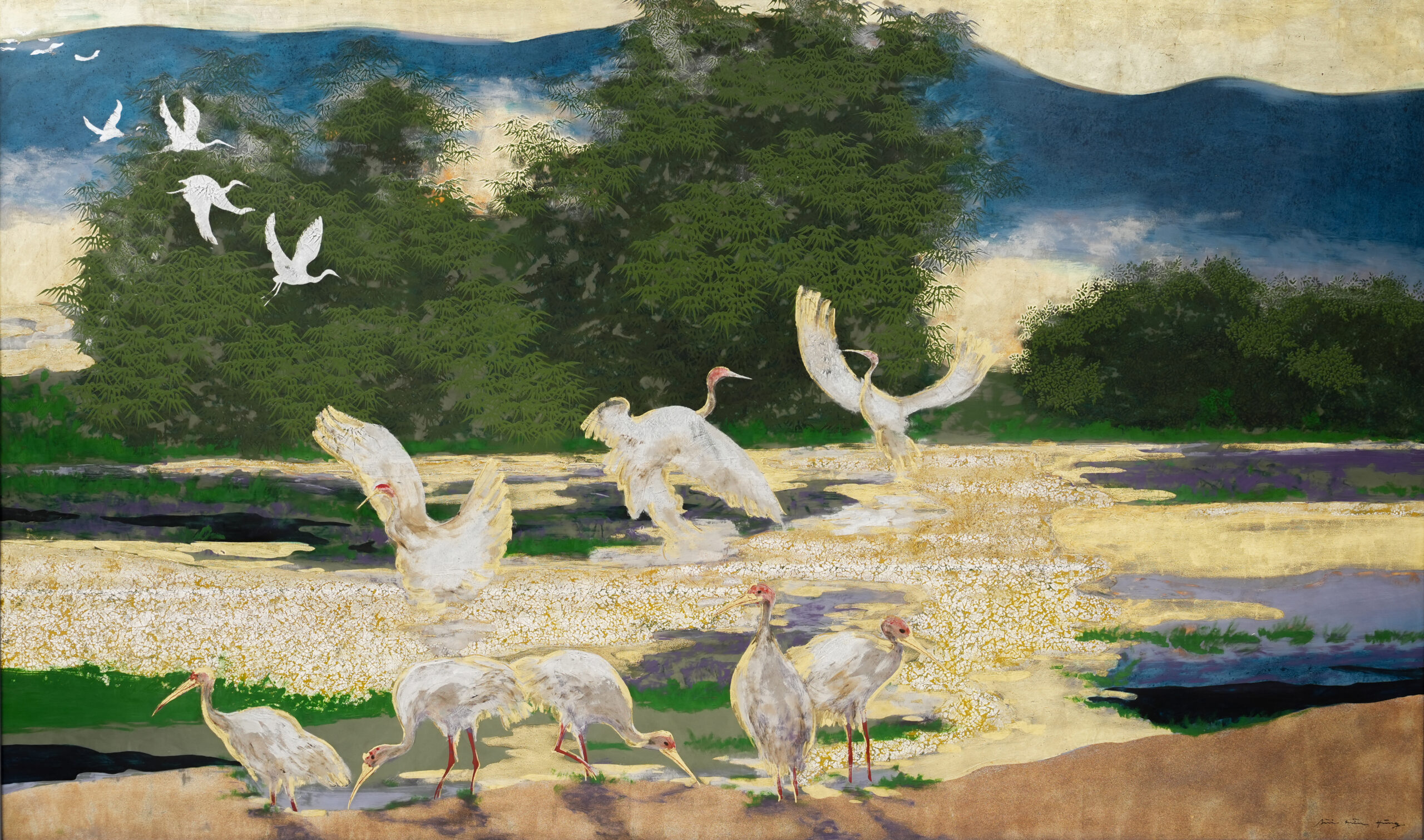
Landscape: Bui Huu Hung, Morning on the Cổ Cò River, Hội An, 2019. Lacquer on wood, 122 x 205 cm. Vietnam’s National Assembly Office and the People’s Council of the city of Hanoi. © Bui Huu Hung Foundation.
Morning on the Cổ Cò River, Hội An, 2019
In 2018, Bui Huu Hung established a studio in Hội An, a coastal town in central Vietnam. The quieter pace and surrounding landscape saw expansive views of the countryside in his works.
Morning on the Cổ Cò River depicts a gathering of đàn cò (storks) at dawn, a bird traditionally associated with harmony and prosperity. The work reflects both the serenity of the setting and the artist’s engagement with scale, format, and compositional openness during this period.
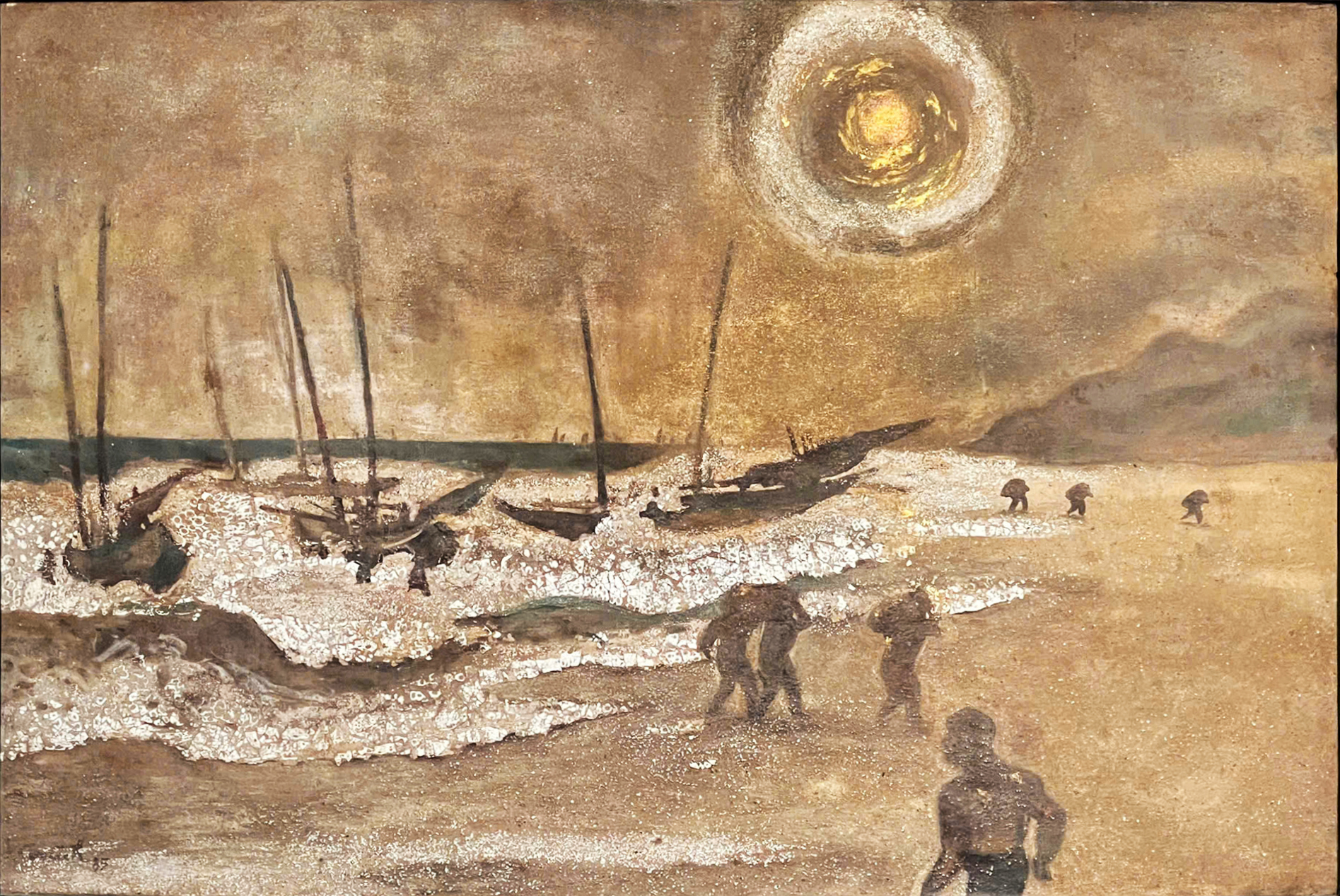
Lacquer on canvas (then & now): Bui Huu Hung, Unquiet Sea, 1978. Lacquer on canvas, 79.5 x 118 cm. Collection of the artist. © Bui Huu Hung Foundation.
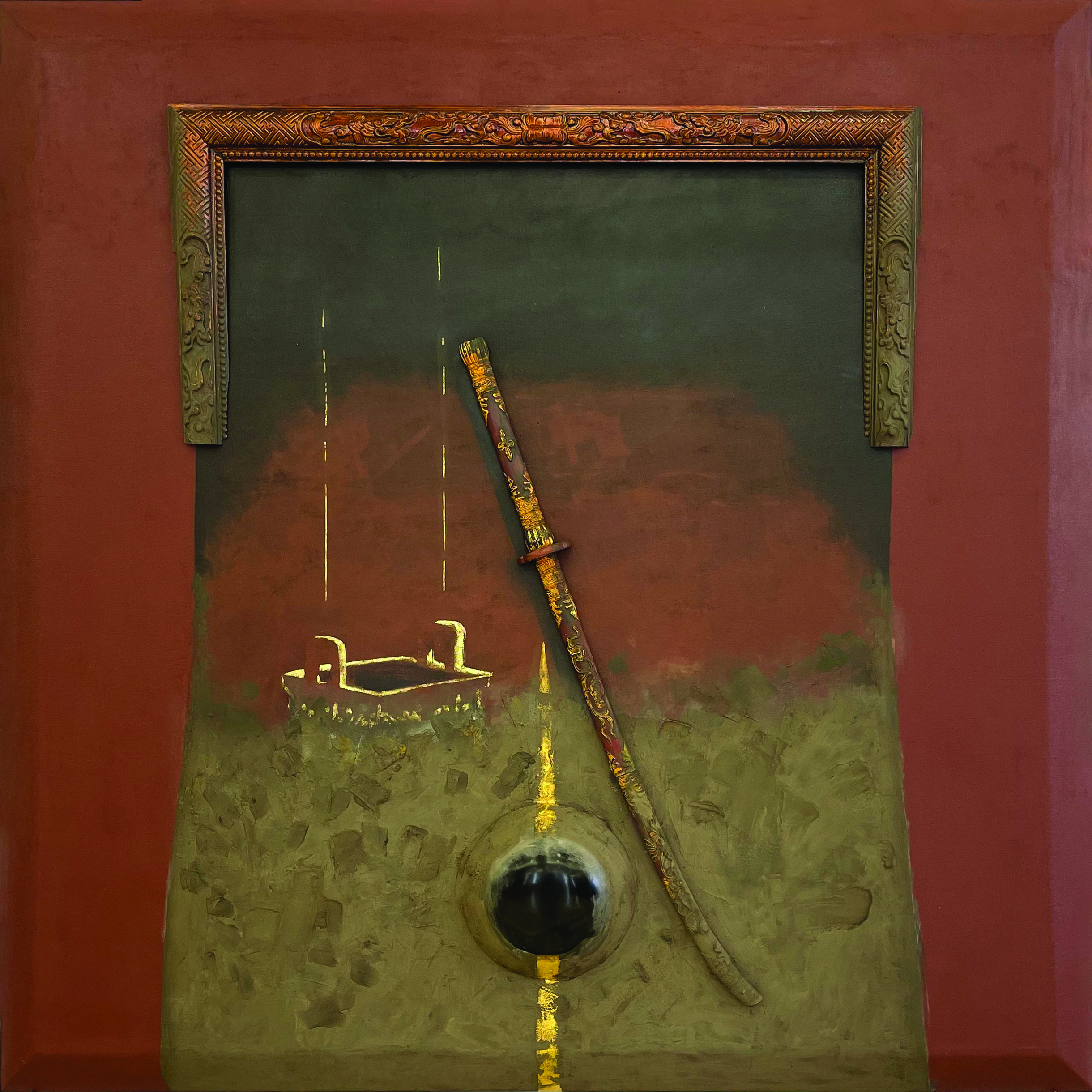
Bui Huu Hung, The Story of the Mother Goddess of the Highlands series, 2023 – 2024. Phú Thọ lacquer, clay powder, wood powder, ochre pigment, cinnabar powder, silver powder, gold powder, gold leaf, silver leaf, and wooden frame on canvas, 211 x 211 cm. Private collection. © Bui Huu Hung Foundation.
Bui Huu Hung began experimenting with lacquer on canvas early in his career, at a time when such support was widely considered unsuitable for the medium. Unquiet Sea depicts the coastline of Sầm Sơn in northern Vietnam, with fishing boats and waves rendered through eggshell inlay. The work was produced in Hanoi during a period when the artist worked nomadically in different lacquer studios. Lacquer on canvas re-emerged in series such as The Story of the Mother Goddess of the Highlands, inspired by Bà Chúa Thượng Ngàn, a deity associated with forests and mountains. Through continued research into surface preparation, Bui Huu Hung transformed this once “impossible” technique into a means of achieving greater freedom of scale and mobility.
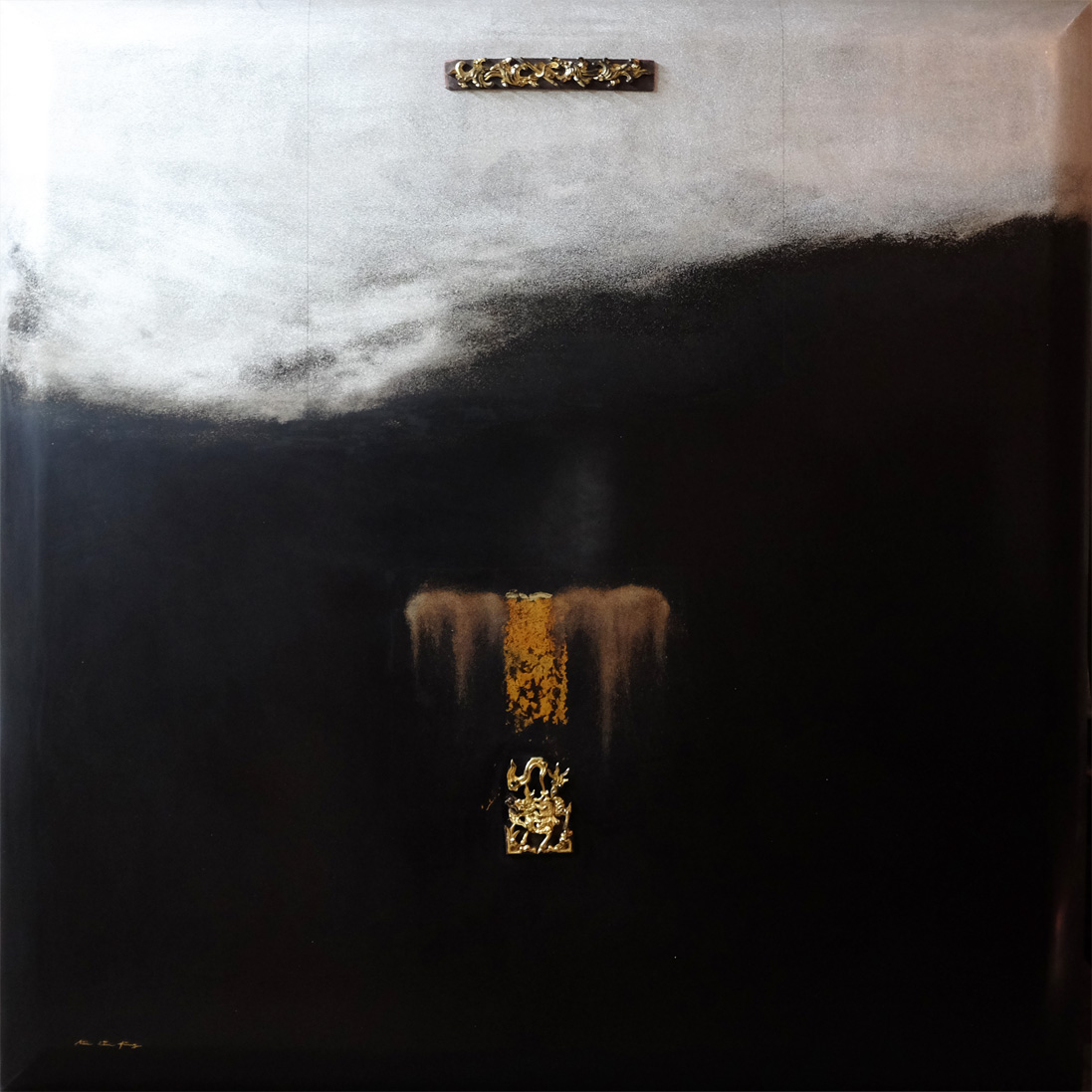
Mixed media & etude: Bui Huu Hung, The First Exercises of the Lacquer Painting Curriculum series, 2016 – 2024. Phú Thọ lacquer, gold powder, silver powder, gold leaf, silver leaf, Nguyen Dynasty antique on wood, 211 x 211 cm. Vietnam’s National Assembly Office and the People’s Council of the city of Hanoi. © Bui Huu Hung Foundation
The First Exercises of the Lacquer Painting Curriculum series, 2016 – 2024
In the late 2000s, Bui Huu Hung returned to abstraction, working at increasingly ambitious scales. Conceived as both artwork and pedagogical tool, The First Exercises of the Lacquer Painting Curriculum functions as an étude dedicated to lacquer technique and training.
Fragments of antique lacquer objects, some over a century old and originally used in ritual or devotional contexts, are embedded into the surface. The work brings together technical experimentation, historical material, and transmission of knowledge for future generations of lacquer artists.
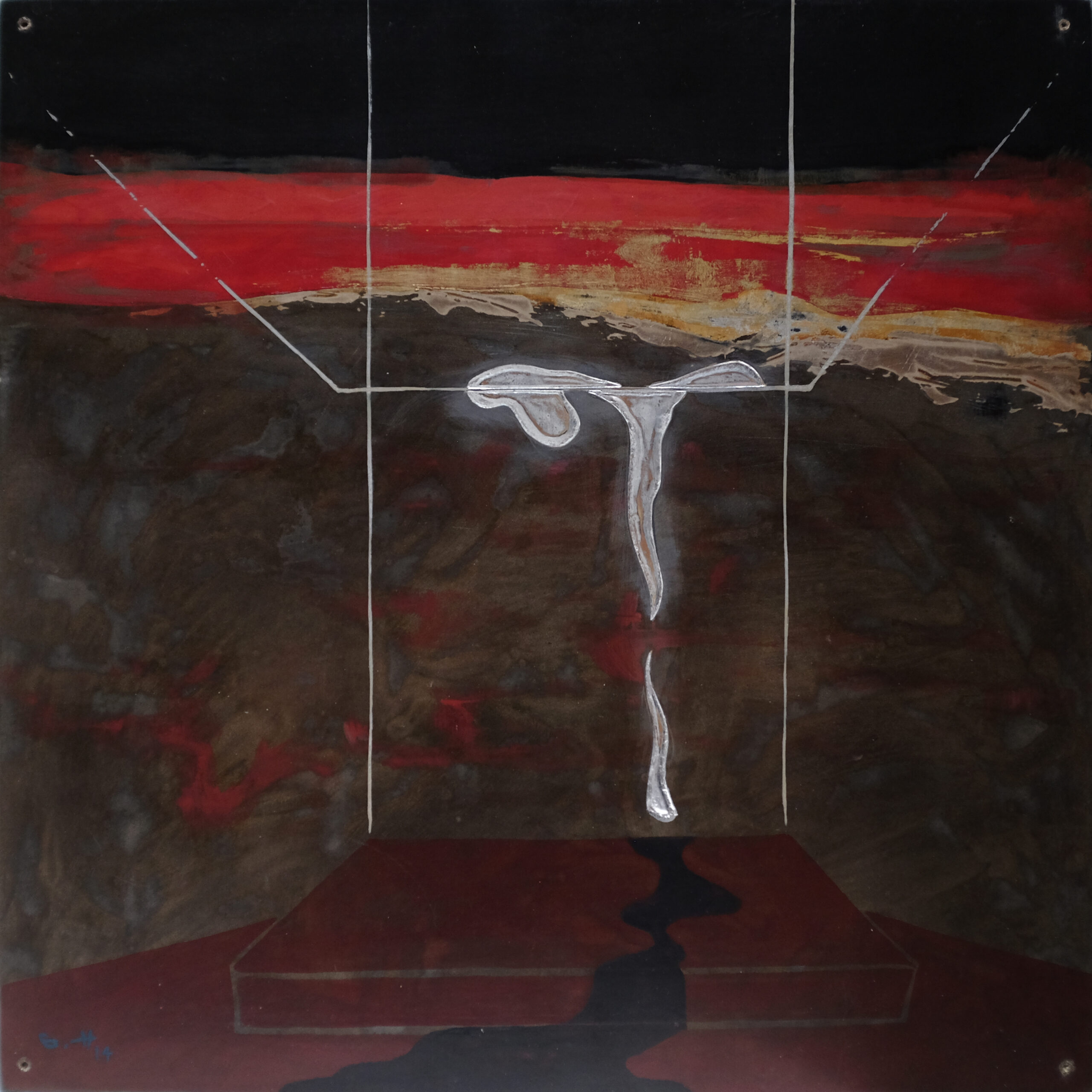
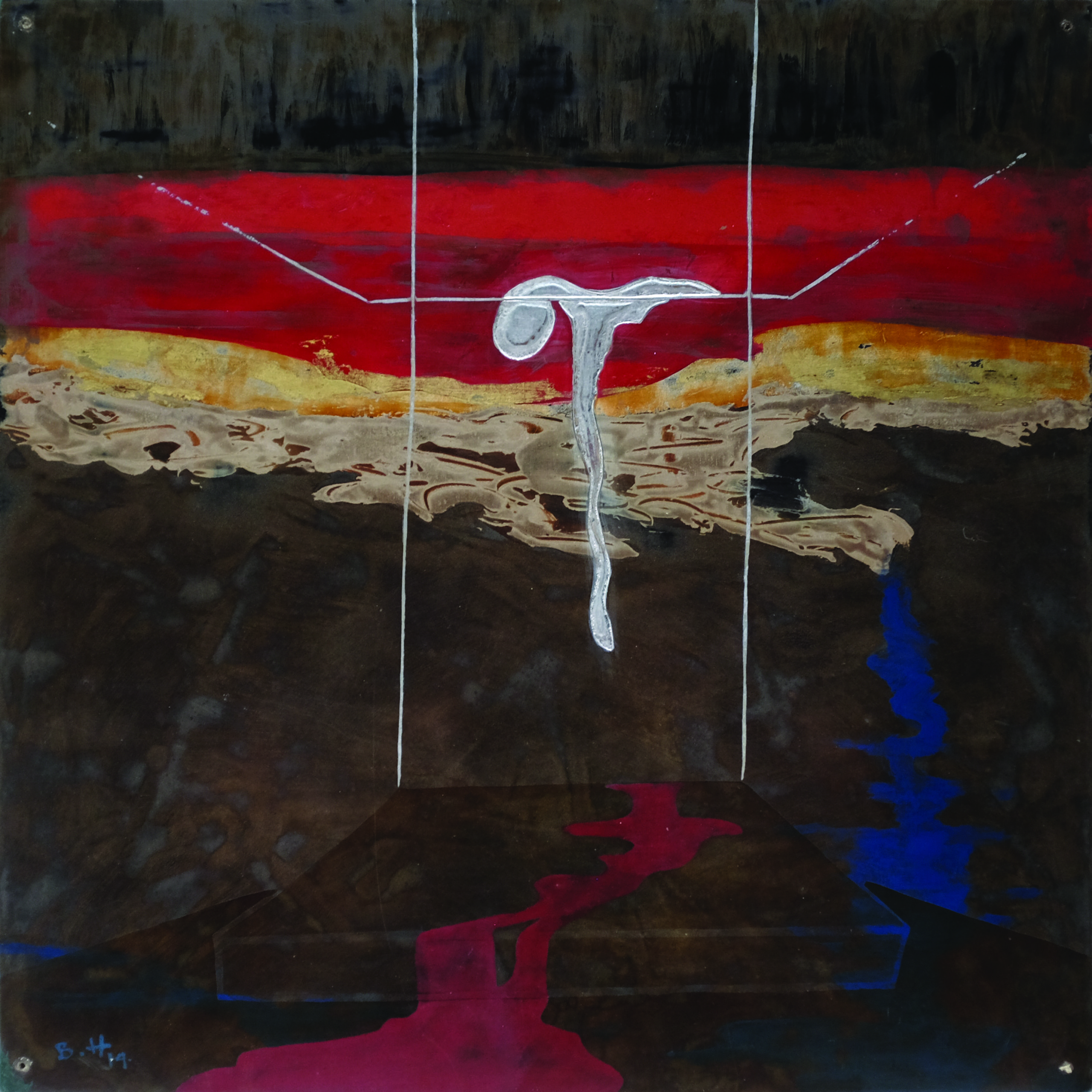
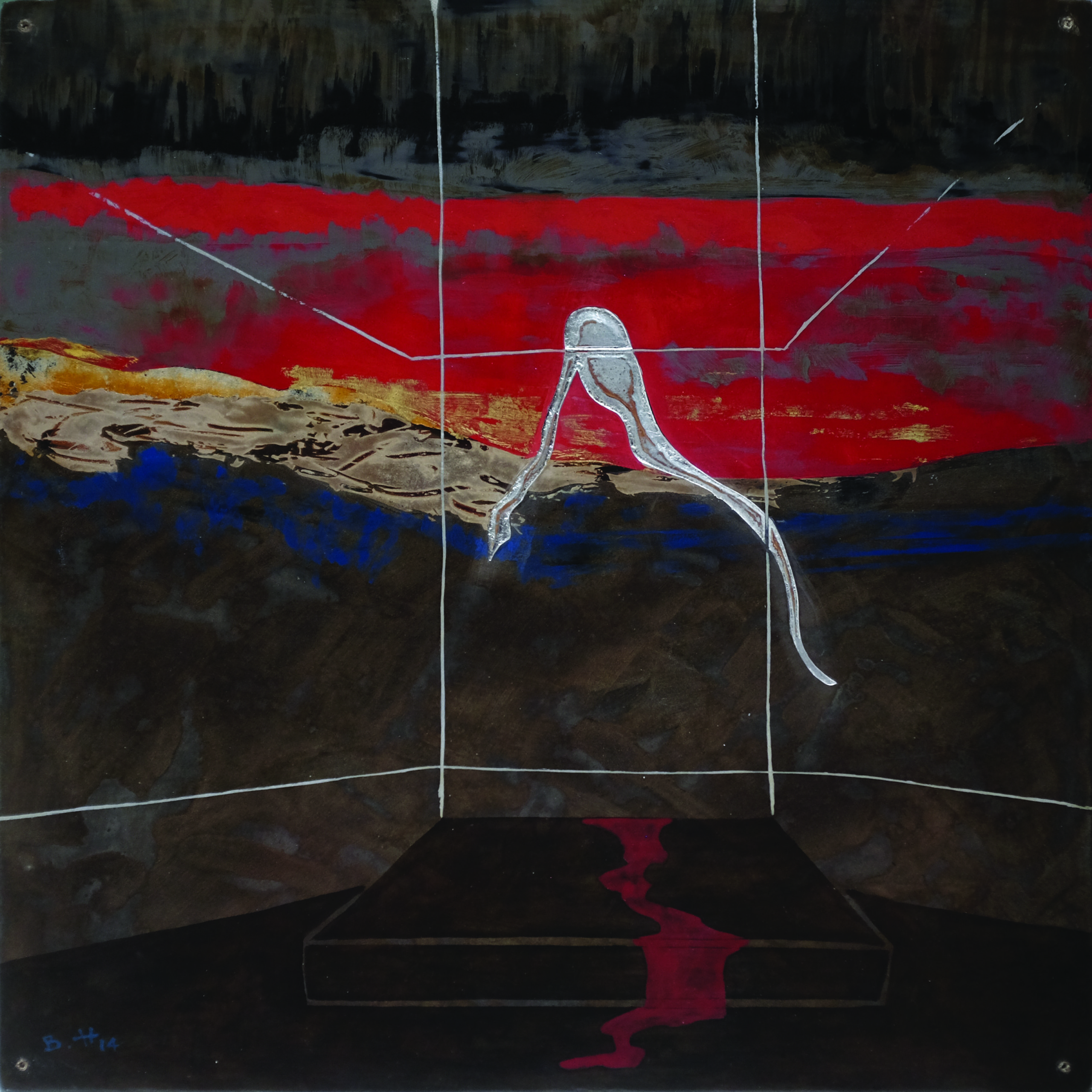
Abstract: Christ on the Cross triptych, 2014. Lacquer on wood, 40 x 40 cm. Collection of the artist. © Bui Huu Hung Foundation.
Christ on the Cross triptych, 2014
Experimentation has remained central to Bui Huu Hung’s practice. Christ on the Cross was produced in 2014 in Marly-le-Roi, France, where the artist co-founded a temporary lacquer studio to test the material under new climatic conditions.
Drawing on lacquer techniques associated with the Qin–Han periods, the triptych uses symbolic imagery to address competing forces of religion, nationalism, and geopolitical power. Beneath these tensions lies the persistent presence of oil, evoked as a dark, underlying force shaping contemporary conflict.