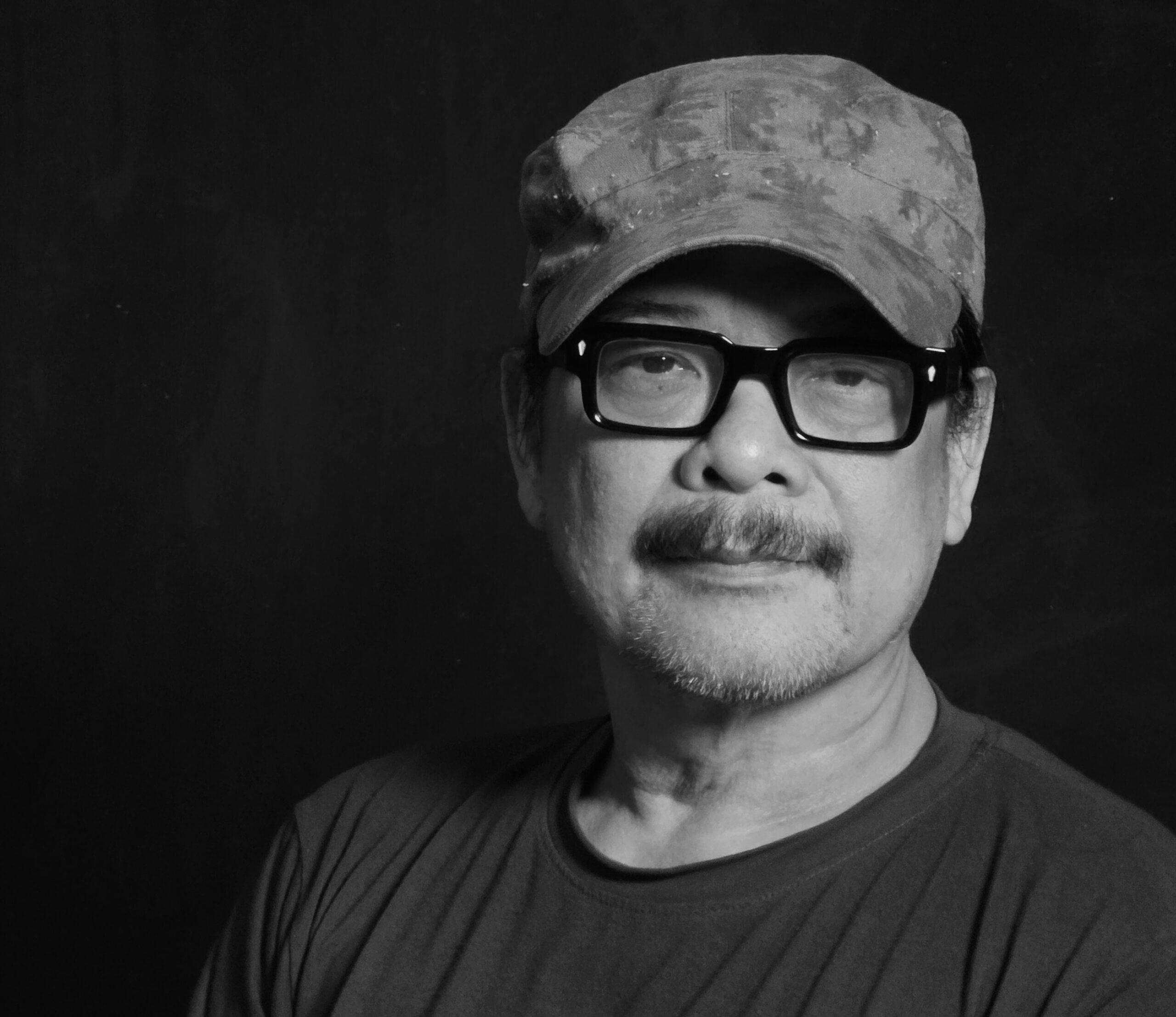
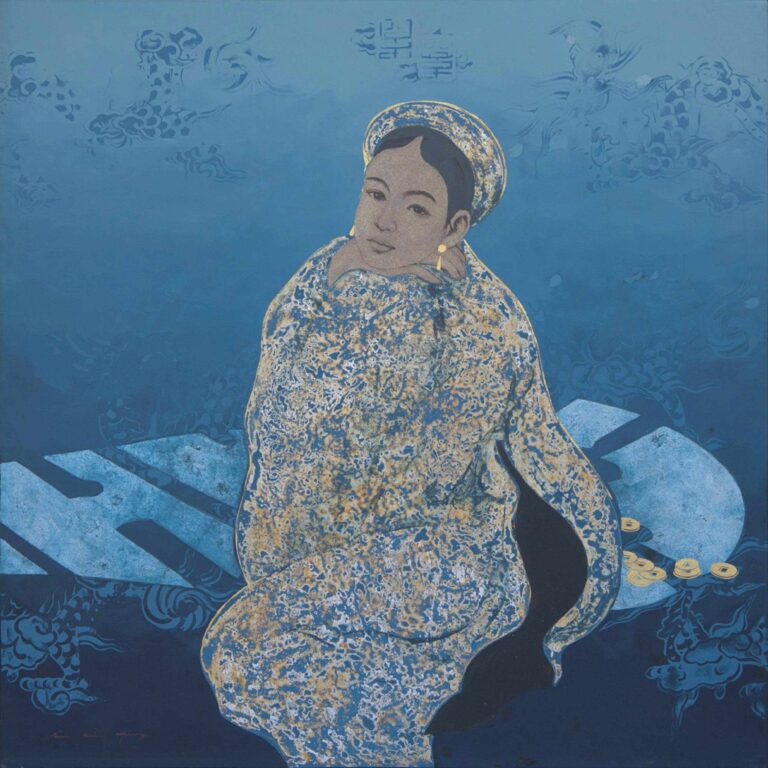
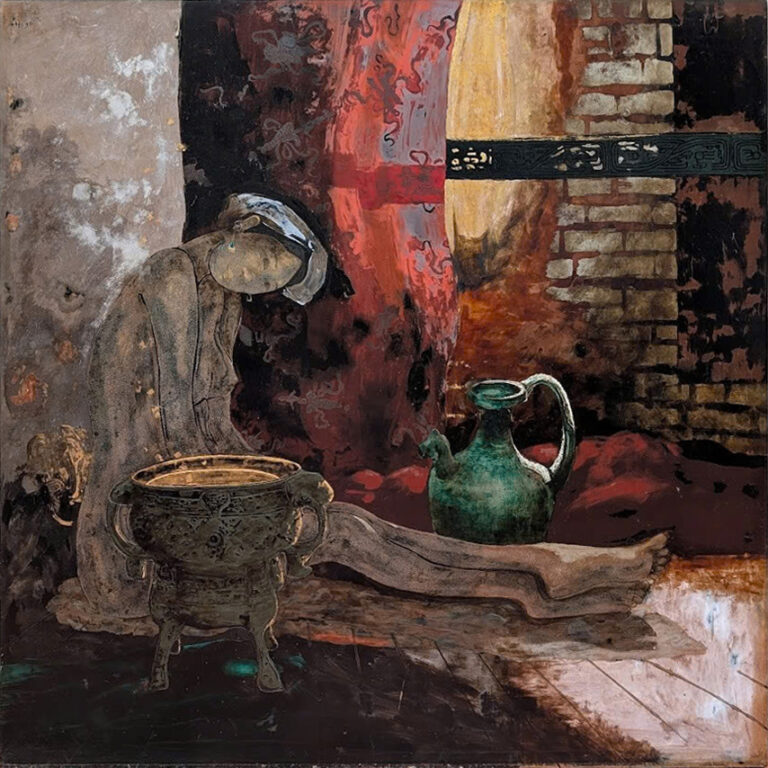
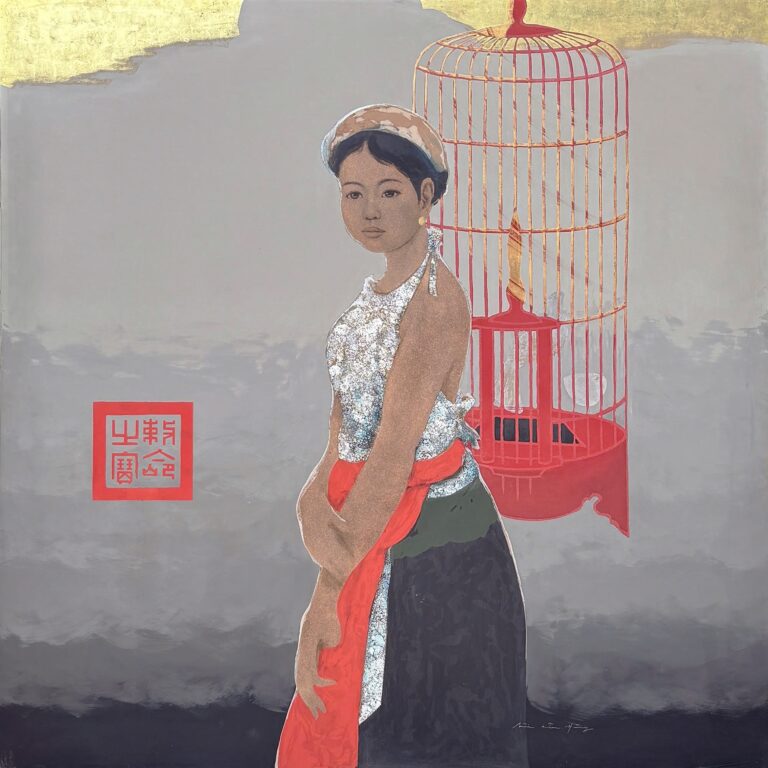
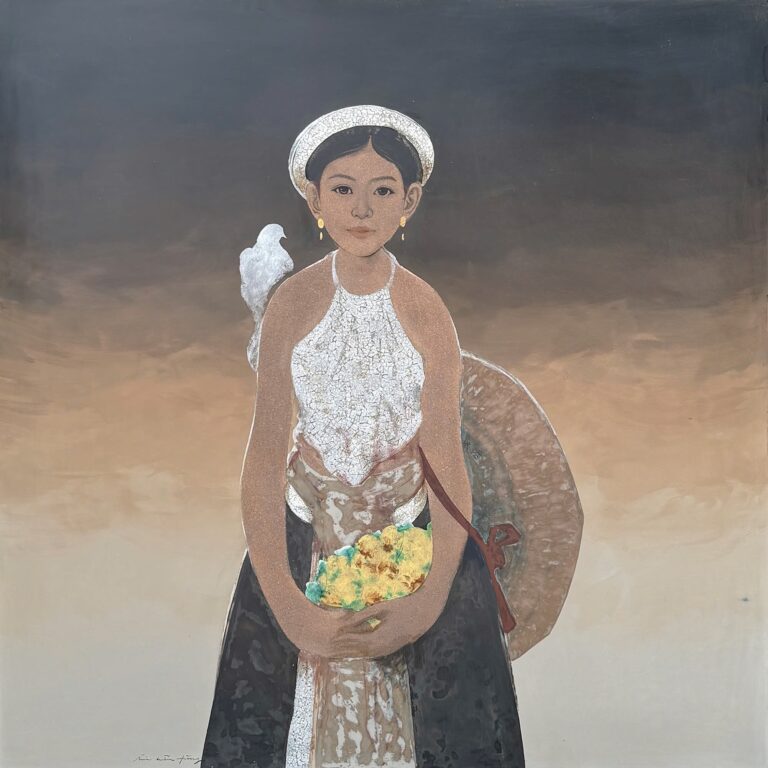
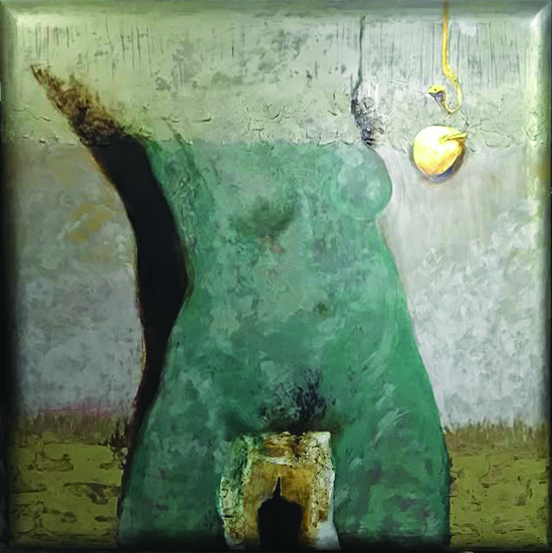
Bùi Hữu Hùng (b. 1957) is a Vietnamese painter whose practice is rooted in the traditional medium of lacquer, which he has continuously redefined through formal innovation and conceptual research. His work bears witness to Vietnam’s turbulent history and its rapid socio-economic transformation, bridging the spirit of Đổi Mới (Renovation) and contemporary abstract expression.
Growing up in a densely populated area of Hanoi during the intense American aerial bombardment of the city, Bùi Hữu Hùng’s childhood was marked by the realities of conflict, an experience later compounded by a stint of combat during the Cambodian War. He received his formal training at the National University of Fine Arts in Hanoi (formerly the École des Beaux-arts de l’Indochine), graduating in 1975. Rising to prominence just prior to the official launch of Đổi Mới in the late 1980s, a period of sweeping economic and cultural reform, his work became closely associated with the spirit of transition that characterised the 1990s, addressing themes of cultural memory, identity, and transformation in a rapidly modernising society.
Bùi Hữu Hùng’s engagement with lacquer began around the age of eighteen, when he frequented workshops around Hanoi. Initially drawn by the vibrant intellectual exchanges, he found himself among many artists who would later become leading figures of their generation. These experiences laid the foundation for his mastery of the demanding techniques of traditional lacquer painting.
In 1986, he founded the Nhà Sàn Studio, which quickly emerged as a hub for experimental practices in lacquer. That same year, he became a member of the Vietnam Fine Arts Association. In the late 1990s, the studio served as the base for Hanoi’s first Avant-Garde collective, which he co-founded alongside artists Lê Hồng Thái, Trương Tân, and Đỗ Minh Tâm. Their inaugural exhibition, supported by the German Socialist Cultural Mission, became a landmark event, signaling the emergence of a self-conscious contemporary art scene in Vietnam.
Bùi Hữu Hùng’s place on the international stage was solidified in 1996 when his painting Ancient Stage was selected for the Lacquer International exhibition at the Fujita Museum in Tokyo, Japan. This led to his admission, alongside Lê Hồng Thái and others, into the International Lacquer Artists Association. The following year, his work was featured in Sacred Seasons at the Four Seasons in Singapore, where he was presented as a key representative of Vietnam’s Đổi Mới and contemporary period.
Bùi Hữu Hùng’s early oeuvre from the 1970s and 1980s consisted of small-scale abstract lacquer compositions, shown at pioneering venues such as Salon Natasha in Hanoi. The 1990s saw the development of his first portrait series, which became a hallmark of his practice, often depicting figures in traditional attire. Alongside these portraits, he produced still lifes and serene landscapes evocative of rural Vietnam, featuring bamboo groves, mountains, and rivers.
Driven by a lifelong commitment to technical research, Bùi Hữu Hùng established an experimental ephemeral lacquer studio in Marly-le-Roi, France, in 2014. Invited by the Association d’Amitié Franco-Vietnamienne, and working with lacquer painter Doãn Chí Trung and technician Phạm Văn Sỹ, the studio aimed to test the behaviour of native Vietnamese lacquer in a dry European climate. The project yielded nearly twenty artworks and inspired Bùi Hữu Hùng to draft a proposal for a formalised lacquer painting curriculum, reflecting his dedication to preserving and transmitting the medium’s knowledge.
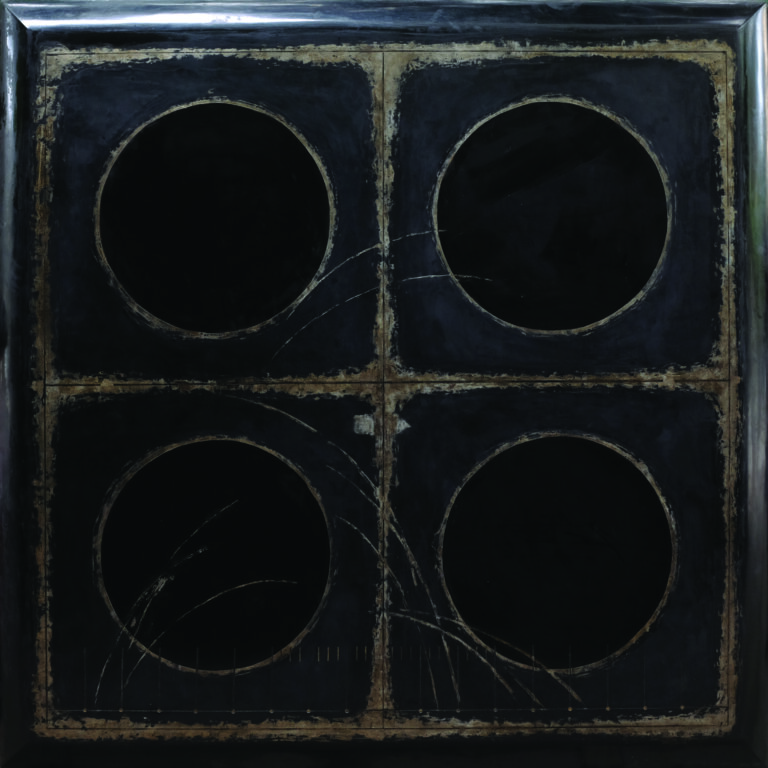
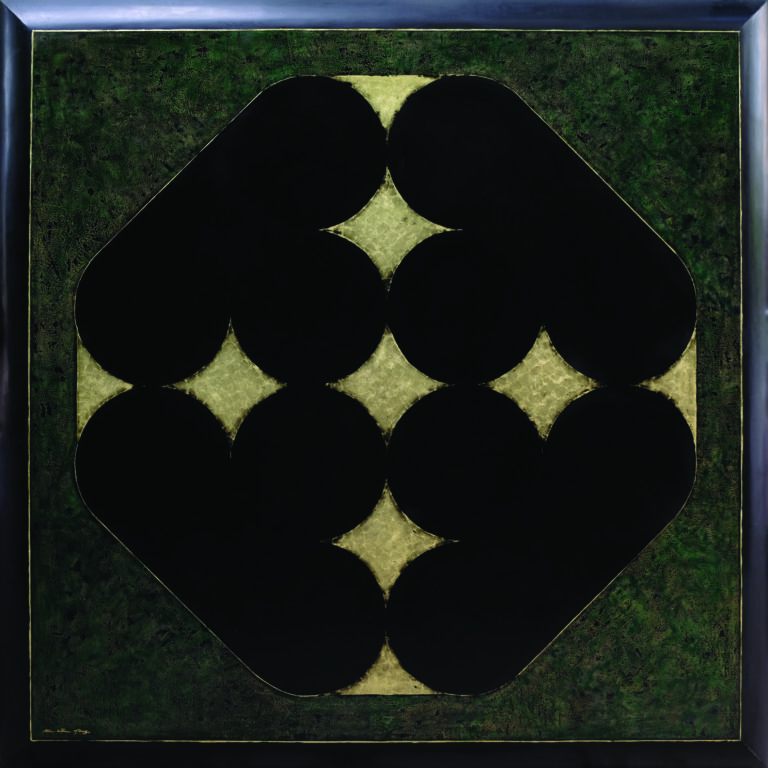
Bùi Hữu Hùng returned in the late 2000s and 2010s to a technique he had pioneered with Lê Hồng Thái in the 1980s: lacquer on canvas. Overcoming early doubts about its durability, he embraced the freedom of scale and support that canvas afforded. This period also marked his renewed engagement with abstraction, expressed through ambitious series such as The Doors, Story of the Mother Goddess of the Highlands, and Red Alluvium. In works like The First Exercises of the Lacquer Painting Curriculum and Études on the Techniques of Jean Dunand, he pursued historical research, seeking to revive and recontextualise ancient lacquer techniques within a contemporary framework.