The Bui Huu Hung Foundation Visits Su Xiaobai’s Alchemical Universe
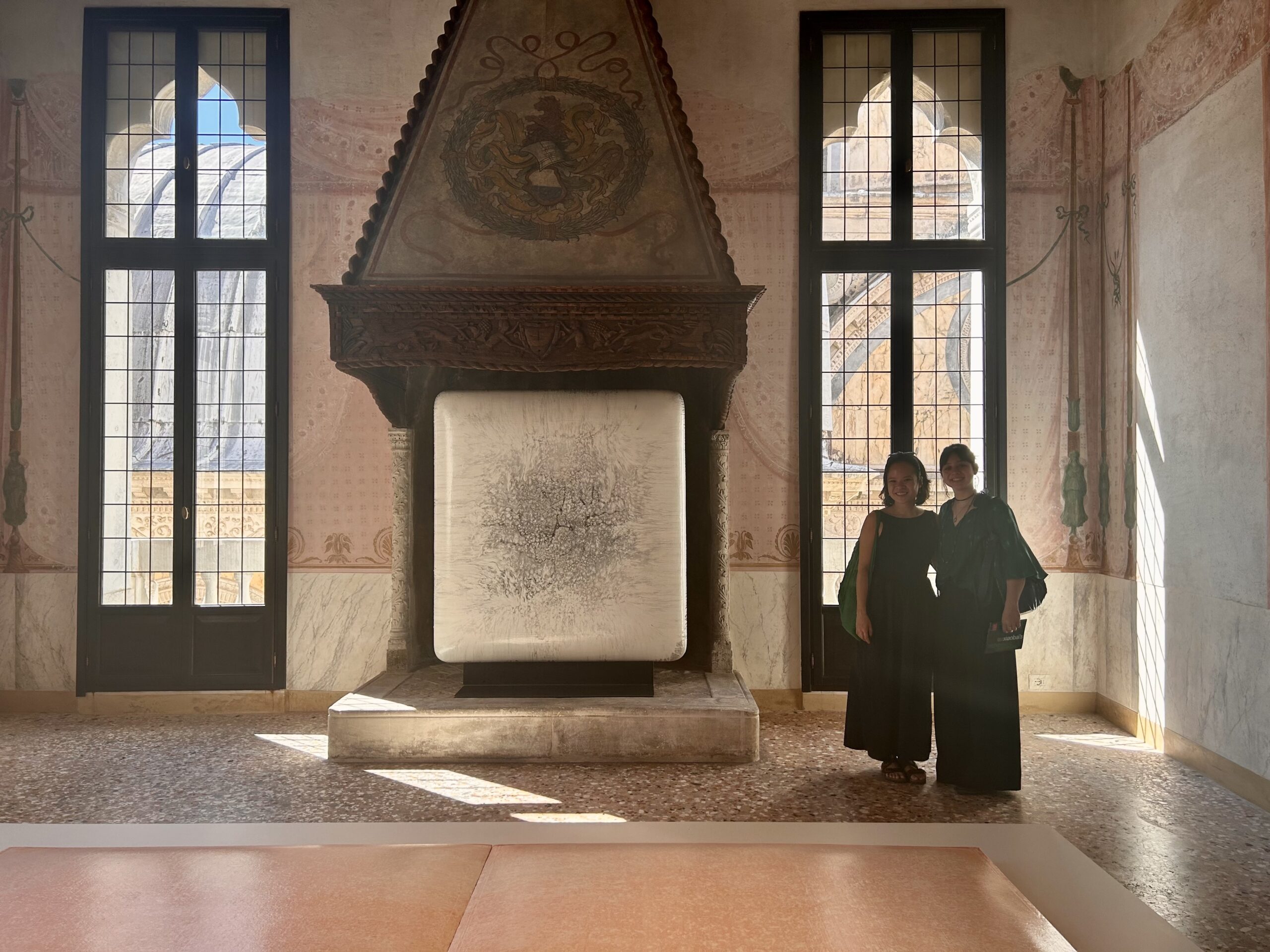
Su Xiaobai’s Alchemical Universe, Room F. Palazzo Soranzo Van Axel Venice.
At the end of May, the Bui Huu Hung Foundation team visited Su Xiaobai’s Alchemical Universe in Venice, an official Collateral Event of the 61st International Art Exhibition of La Biennale di Venezia at Palazzo Soranzo Van Axel in Cannaregio.
We arrived without an appointment and, to our happy surprise, were immediately welcomed by an incredibly generous mediation team. What began as a spontaneous visit soon became a long conversation about Su Xiaobai’s work, his materials and his research into lacquer. For a foundation whose daily conversations often revolve around lacquer, drying, sanding, layers and all the surprises the material can bring, we naturally had many questions.
Curated by Stephen Little, Curator of Chinese Art and Head of the Chinese, Korean, and South and Southeast Asian Art Departments at LACMA, the exhibition was designed by architect Kulapat Yantrasast of WHY Architecture. Yantrasast is also the architect behind Dib Bangkok, Thailand’s first international contemporary art museum. The opening of this institution had been one of the most exciting pieces of news to reach us from our neighbouring country just a few months earlier.
Before even looking closely at the techniques behind the works, we were struck by the way they inhabited Palazzo Soranzo Van Axel. The history of the Gothic palazzo seemed to move alongside Su Xiaobai’s paintings. Works appeared inside monumental fireplaces, close to the ground, against aged walls and tucked into unexpected corners. Elsewhere, paintings and installations were suspended or placed above reflective surfaces, catching Venice’s changing natural light.
There was something playful in the way the works occupied such a historic building. The palazzo was never treated as a neutral white cube, nor did the paintings seem intimidated by their surroundings. To us, the architecture and the works simply seemed comfortable with one another.
The exhibition brings together 35 lacquer paintings dating from 2009 to the present, alongside the artist’s first lacquer work, produced in Fujian in 2003. Moving through the rooms, we followed more than two decades of Su’s experiments with natural lacquer, from these early encounters with the material to recent works made for Venice.
During the visit and in our later research, we learnt more about Su Xiaobai’s relationship with dàqī, natural Chinese lacquer. Since 2003, he has worked almost exclusively with the material, combining it with mineral pigments, stone and metal powders. Layer after layer is applied, dried, sanded and worked again. What first appears calm and minimal on the wall is, in fact, the result of a rather intense material process.
One of the things that interested us most was that Su did not begin his career as a lacquer artist. He trained and worked as an oil painter and only turned towards lacquer when he was almost forty. His relationship with dàqī was therefore not a simple return to tradition. He came to the material with years of painting and exposure to art in Germany behind him.
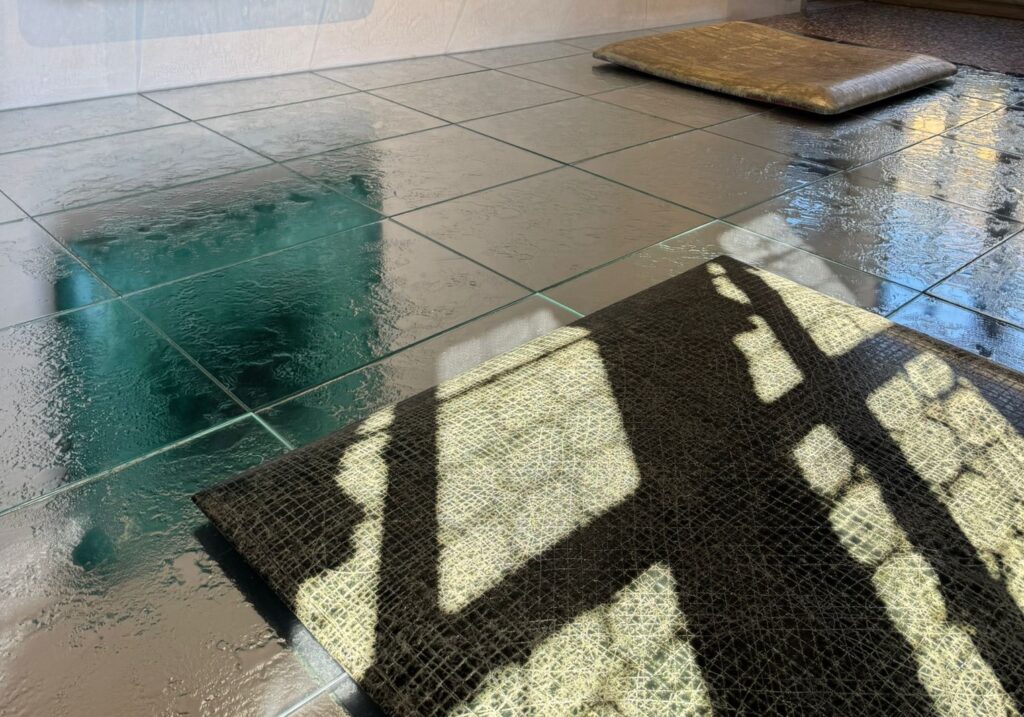
Su Xiaobai’s Alchemical Universe, Room F. Palazzo Soranzo Van Axel Venice.
His earlier experience with oil painting never entirely disappeared. This is perhaps where the exhibition’s title, Alchemical Universe, becomes particularly fitting: different painting histories, materials and processes are brought together, deliberately and through the unpredictable reactions of lacquer itself.
Among the most recent works presented is the Niao Niao series. The title evokes something lingering and difficult to grasp completely: an atmosphere, a distant sound or a presence slowly disappearing. These quieter works felt particularly at home in the palazzo. They asked us to stay with them for a little longer, to move around them and allow their surfaces to change with the light.
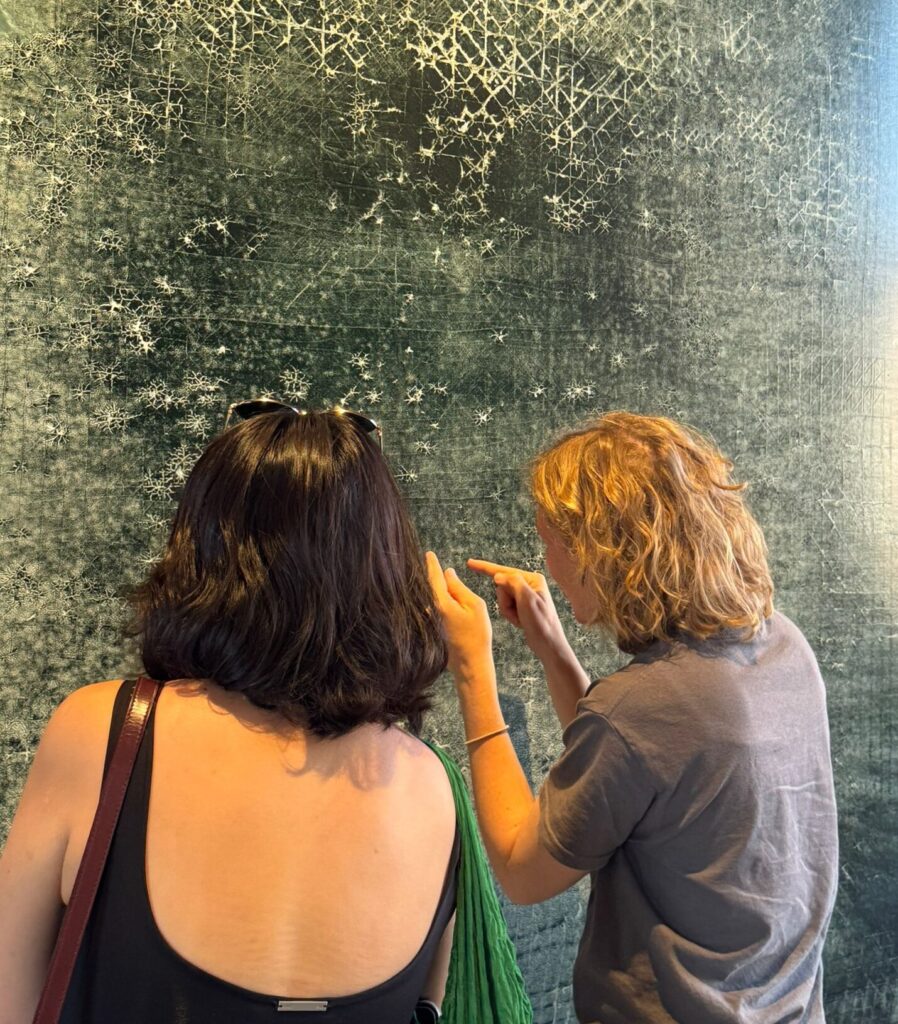
Su Xiaobai’s Alchemical Universe. Palazzo Soranzo Van Axel Venice.
As the visit continued, we naturally began drawing connections with the work we know most intimately: that of Bui Huu Hung.
The comparison is not a visual one. Su Xiaobai and Bui Huu Hung come from different artistic and geographical histories. Yet, the more we learnt about Su’s practice, the more certain points of connection appeared.
Both artists began their careers in artistic environments shaped by Socialist Realism. Su initially trained and worked within figurative painting before studying in Düsseldorf and eventually turning towards natural lacquer in 2003. Bui Huu Hung, meanwhile, developed his practice in Vietnamese sơn mài, working through the material itself to gradually move away from prescribed modes of representation.
Both artists also have very specific relationships with the geography of lacquer. Su has spoken about the differences between regional lacquer traditions in China and how climate, history of the different dynasties, and local knowledge affect the material. His first experiments with lacquer took place in Fujian, one of China’s historic centres of lacquer production.
Bui Huu Hung’s practice is similarly rooted in a particular place and material. He works exclusively with sơn ta, the natural lacquer traditionally harvested in Phú Thọ in northern Vietnam.
This was where the conversation became most familiar to us. Natural lacquer has a personality of its own. Temperature matters. Humidity matters. Drying time matters. Layers do not always react exactly as expected. Artists can plan carefully, but the material always keeps a large part of the decision-making for itself.
The strongest connection between Su Xiaobai and Bui Huu Hung may lie in this attitude towards the material. Lacquer requires devotion, patience, repetition and a certain willingness to lose control. One layer can hide another without completely erasing it. A surface can change through drying, sanding and the interaction of materials.
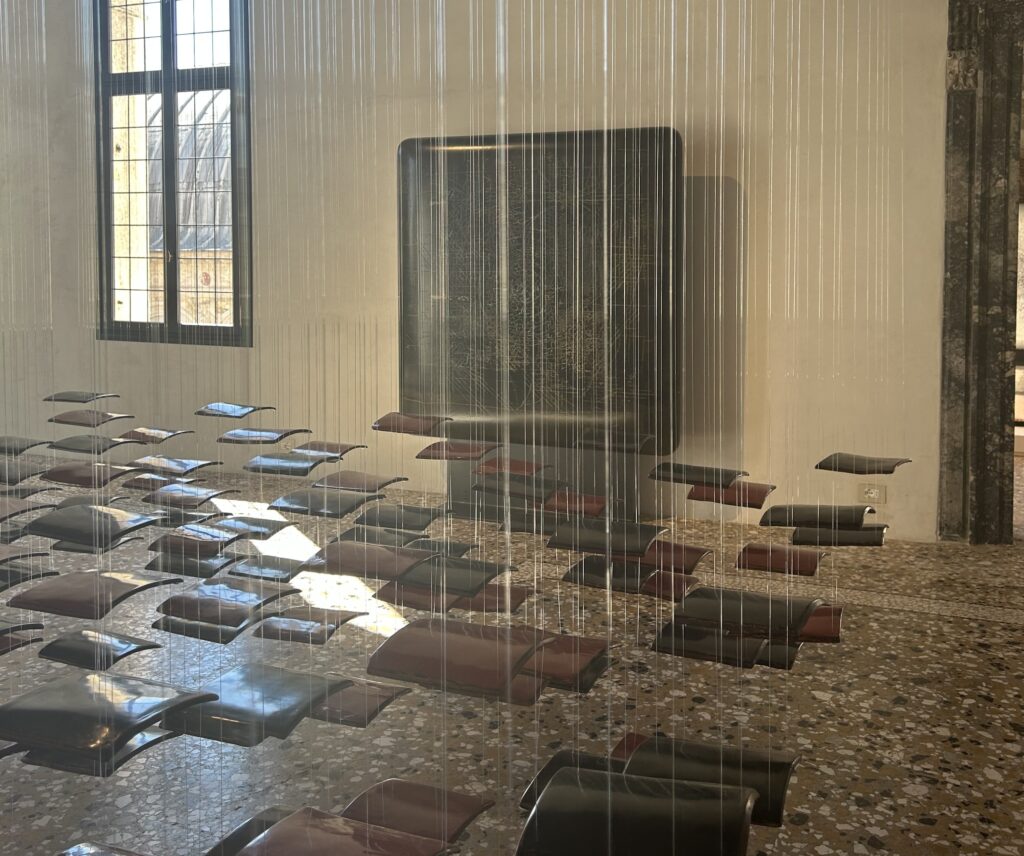
Installation view, Su Xiaobai’s Alchemical Universe, Room E. Palazzo Soranzo Van Axel Venice.
In an interview with Stephen Little published in the Su Xiaobai’s Alchemical Universe, Su details his practice with the medium. He also speaks about reaching a moment when a painting ceases to be solely his to determine. Reading this after seeing the exhibition felt familiar. In Bui Huu Hung’s studio, too, the final surface develops through a long exchange between intention, experience and the unpredictable behaviour of sơn ta.
For us, Alchemical Universe was therefore more than an encounter with another contemporary lacquer practice. It was also a chance to see how an artist, coming from a completely different path, has spent more than two decades questioning and testing a material we work around every day.
Su Xiaobai and Bui Huu Hung have followed very different artistic trajectories, but both practices come from long periods of looking, testing, and waiting. We left Palazzo Soranzo Van Axel thinking that perhaps this is what keeps an ancient material alive. Not simply preserving what has already been done with it, but remaining curious about what else it might do.
The exhibition remains on view until 22 November 2026. If you find yourself in Venice this year, we warmly recommend a visit.
______________________
Su Xiaobai’s Alchemical Universe. Curated by Stephen Little, Curator of Chinese Art and Head of the Chinese, Korean, and South and Southeast Asian Art Departments, LACMA. Exhibition design by Kulapat Yantrasast, WHY Architecture. Presented by the Su Xiaobai Foundation in collaboration with the Los Angeles County Museum of Art (LACMA). 9 May to 22 November 2026, Palazzo Soranzo Van Axel, Cannaregio, Venice. An official Collateral Event of the 61st International Art Exhibition of La Biennale di Venezia.