Many Materials, One Surface: Vietnamese Lacquer and the Art of Mixed Media
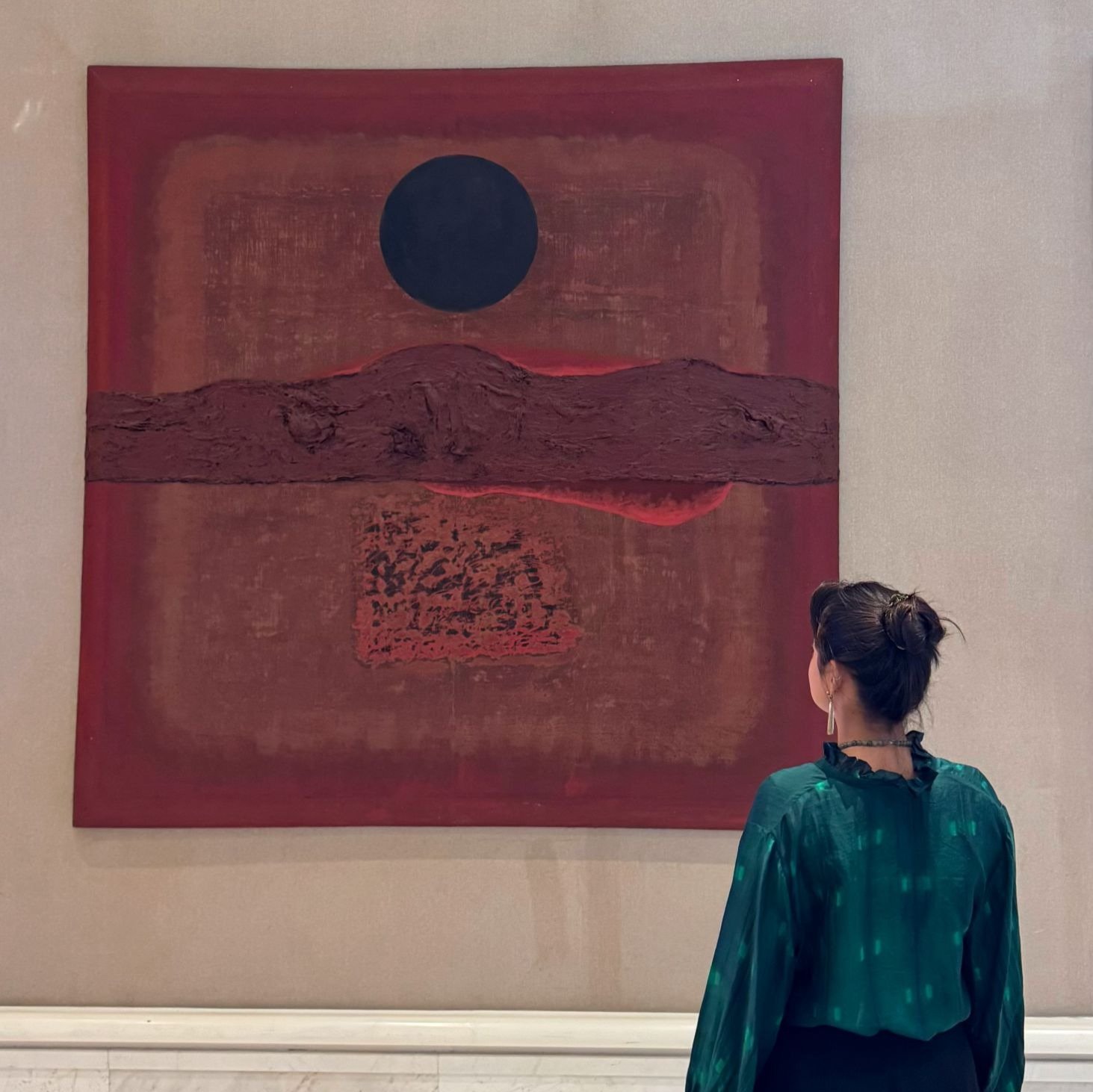
Abstract II (2016), Bùi Hữu Hùng, lacquer on canvas, on display at The Grand Hồ Tràm, October 2026
“Vietnamese lacquer is arguably the world’s finest form of mixed-media art, though not necessarily the ‘Revolution of Modern Painting’ it was once proclaimed.” – Bùi Hữu Hùng, 2014
Mixed-media art is, at its simplest, art made from more than one material: paint alongside paper, fabric, metal, wood or everyday objects, brought together in a single work. In Western art history, its story is often traced to 1912, when Pablo Picasso glued a piece of printed oilcloth onto an oval canvas and framed it with rope. Still Life with Chair Caning is widely described as the first Cubist collage, and with it a simple idea entered modern art: a painting need not be made of paint alone. In the decades that followed, Hannah Höch assembled photomontages from cut-up magazines, Kurt Schwitters turned rooms of his house in Hanover into an architectural assemblage, and Robert Rauschenberg combined painting with everyday objects. By 1961, the Museum of Modern Art in New York was devoting an entire exhibition to The Art of Assemblage. Each of these artists asked, in their own way, what a work of art can be made of.
In Vietnam, combining materials in a single surface has a much longer history.
Vietnamese lacquer is sometimes presented as a modern art form, born with the founding of the École des Beaux-Arts de l’Indochine in 1925. Bùi Hữu Hùng, who has worked with natural Phú Thọ lacquer for nearly fifty years, looks much further back. He points to the Việt Khê tomb in Hải Phòng, a Đông Sơn boat burial around 2,500 years old, excavated in 1961. Among its finds were lacquered wooden objects, lacquered leather goods and black-lacquered oars decorated with patterns. Long before lacquer reached gallery walls, it was already being used to coat, bind and decorate other materials.
It still does all three, as becomes clear when you follow a lacquer painting from the inside out. It begins with the vóc, its base: typically wood, covered with cloth bonded in lacquer, then built up with layers of lacquer mixed with earth, traditionally the alluvial soil of the Red River. The lacquer itself is the sap of the lacquer tree from Phú Thọ, refined and aged by artisans, and it holds everything together from the first layer to the last. Colour brings in yet more: cinnabar for red, gold and silver in leaf and powder. Traditional artisans went further still, making whites from crushed seashells and eggshell, and greens from powdered jade and ceramics. Even before the first colour is laid down, the panel already holds wood, cloth, earth and resin.
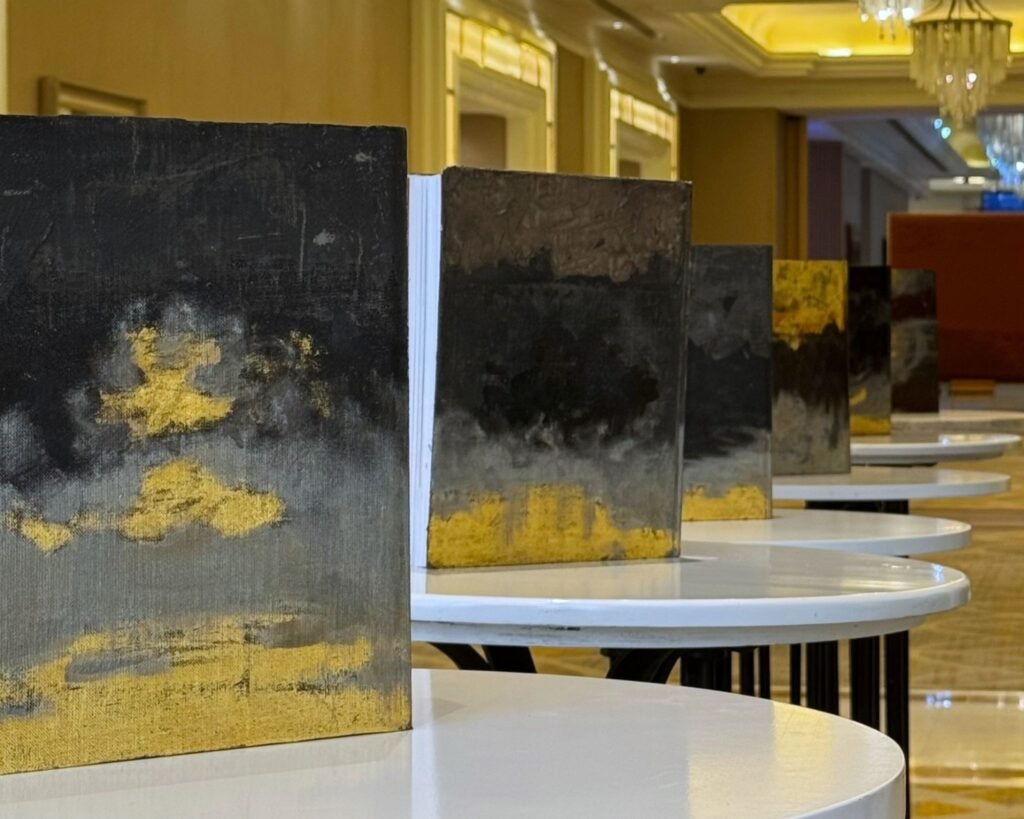
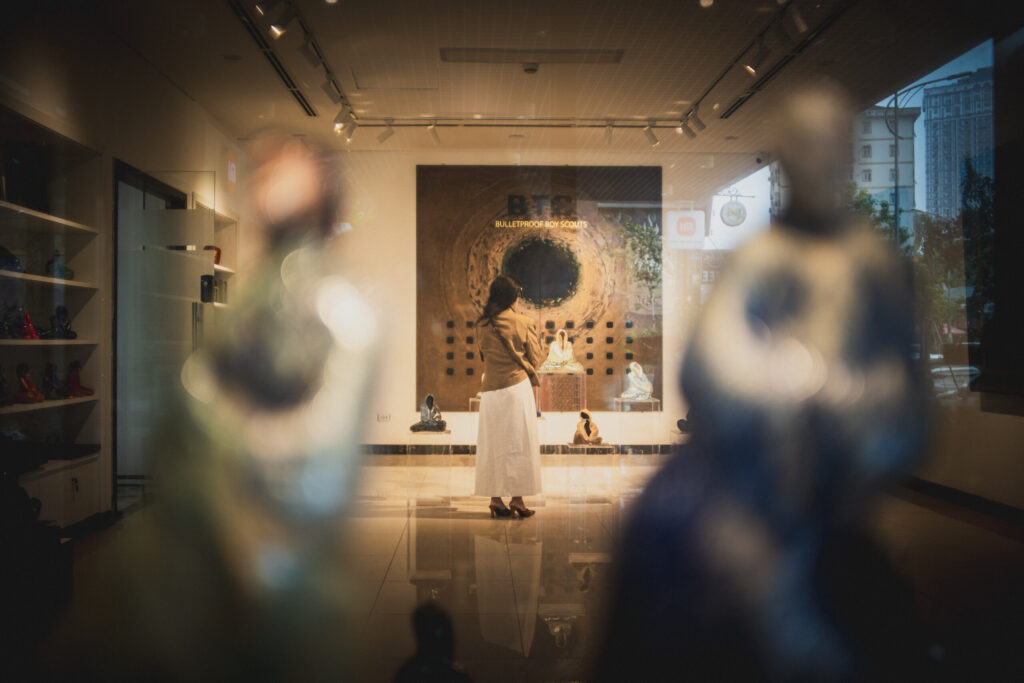
Covers of The Sơn Mài Code, painted in lacquer and gold, on display at The Grand Hồ Tràm, October 2026
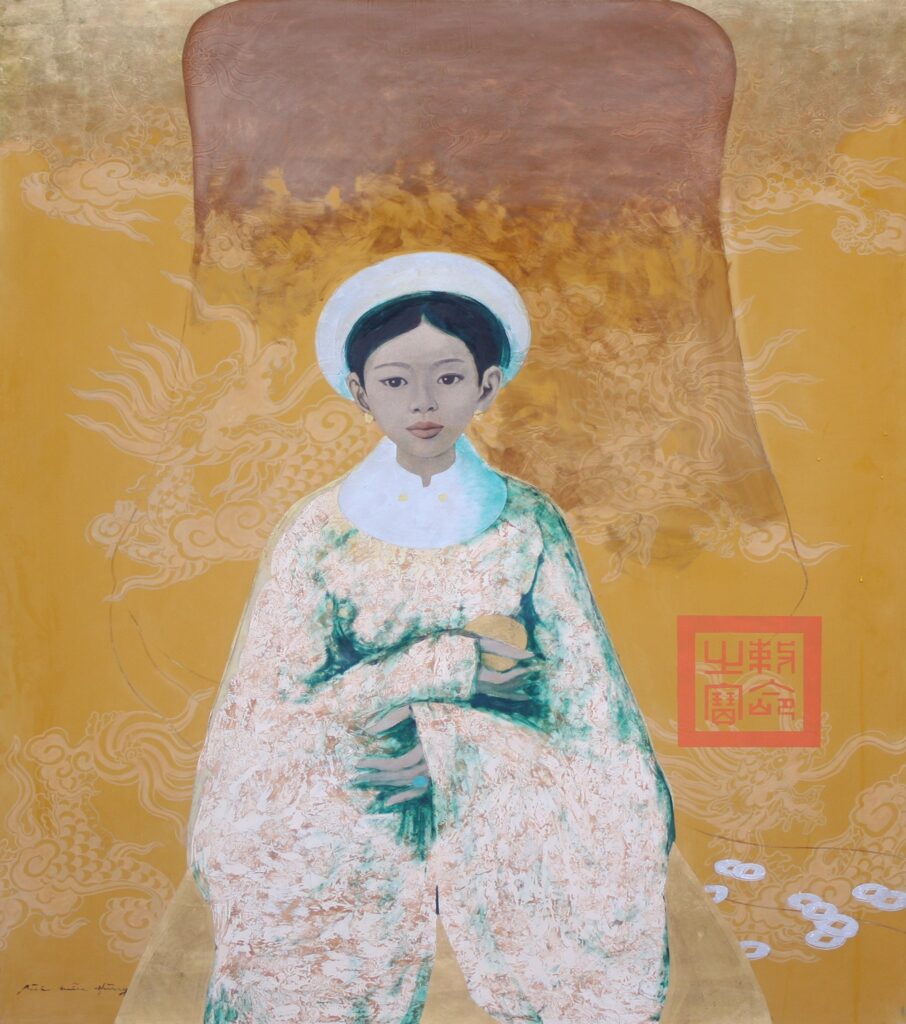
What turns these materials into a painting is the process that gives the art its name. Sơn mài joins two words: sơn, to lacquer, and mài, to sand. The painter applies layer after layer, leaving each to cure, sometimes for weeks, then sands back through them so that colours and materials laid down earlier rise to the surface. Bùi Hữu Hùng likens sanding to an oil painter’s work with brush and palette knife, yet the layers often combine in unexpected ways, surprising even the artist. The image is not simply applied on top of the materials; it is drawn out from within them.
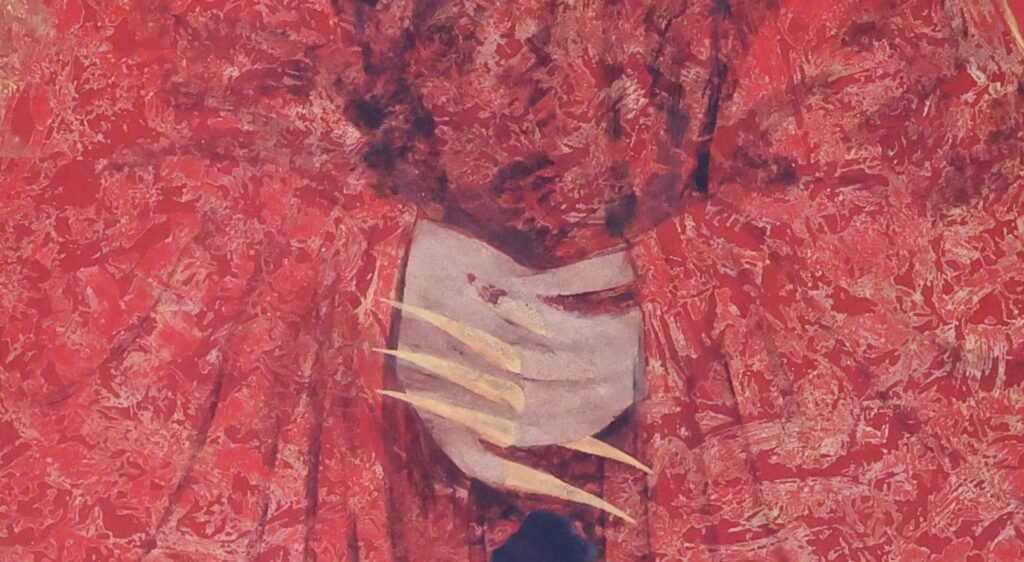
Detail of Em Mơ (2003), Bùi Hữu Hùng, lacquer on wood.
Bùi Hữu Hùng traces this layered way of working to an ancient technique known as rhinoceros skin lacquer, which he sees as the origin of mixed-media art. In his account, it developed from the early black lacquer of Đông Sơn objects. Craftsmen mixed lacquer with wood powder, cloth, rope and soil to build textured surfaces, then added gold and silver dust, crushed stone and glass, and sanded them into undulating layers, glossy and matte, translucent and opaque. Simpler versions survived into modern times: when he entered the lacquer workshops of Hanoi in the 1970s, the shelves were stacked with boxes in amber, jade green and reddish brown that Vietnamese craftsmen called đồi mồi, tortoiseshell.
His own work has kept widening the range of materials. In 1978 he painted his first lacquer on canvas, at a time when many senior artists doubted it would last. His Red Alluvium series combines Phú Thọ lacquer with clay and wood powder, ochre, cinnabar, gold and silver, coarse burlap, muslin, rope and even a violin. Other works incorporate antiques from the Nguyễn dynasty. “Lacquer is an art of creating materiality,” he writes. “It can draw upon any material available around us.”
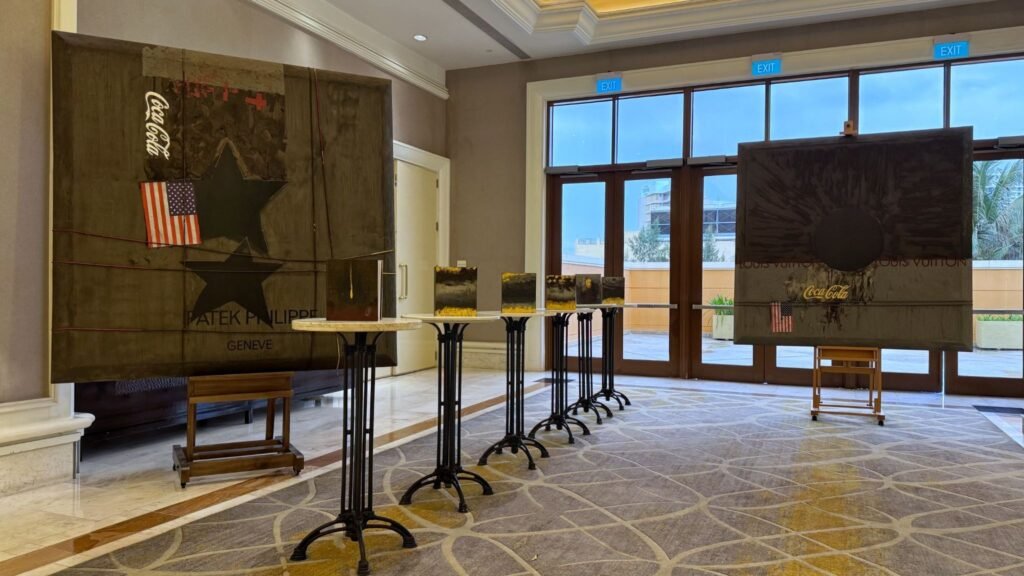
The American Dream II and The American Dream IV (Grey Series, 2018), Bùi Hữu Hùng, with the lacquer covers of The Sơn Mài Code, at The Grand Hồ Tràm, October 2026. Phú Thọ lacquer, clay and wood powder, ochre, cinnabar, gold and silver, burlap, muslin and rope on canvas.
In 1912, a piece of oilcloth on canvas was enough to open a new chapter in modern art. In a Vietnamese lacquer painting, cloth is one of the very first layers: bonded to the wood, then buried beneath earth, lacquer and colour.